
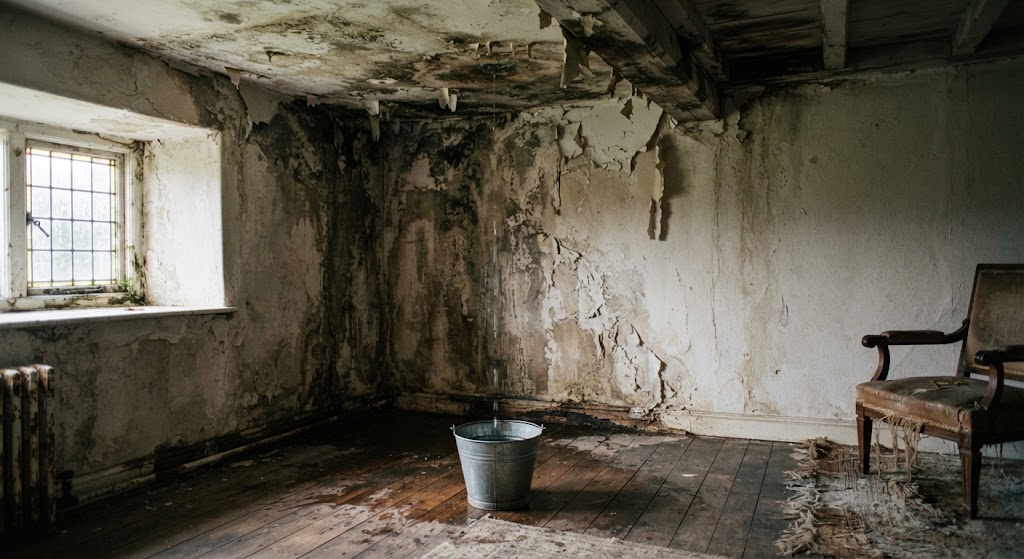
A small roof leak may seem harmless when it produces only an occasional drip or faint ceiling stain. However, even limited water ingress can gradually damage insulation, timber, plaster and electrical components. Prompt professional roof leak repairs help prevent a minor defect from developing into a more extensive and expensive problem.
1. How Minor Roof Leaks Spread
Water rarely remains confined to the point where it enters the roof. It can travel along rafters, underlay and other building components before becoming visible inside the home.
Hidden moisture is particularly concerning because the affected area may be much larger than the visible stain suggests.
A small leak around flashing, a cracked tile or a deteriorated metal roof fastener may continue during every rainfall. Without identifying the source, homeowners risk allowing repeated water exposure to weaken surrounding materials.
2. Structural Damage and Timber Deterioration
Roof framing, battens and other timber components can deteriorate when exposed to persistent moisture. In severe cases, prolonged water ingress may contribute to timber decay and compromise parts of the roof structure.
Structural integrity depends on keeping load-bearing components in suitable condition.
A roofing professional can investigate recurring leaks, assess accessible structural elements and recommend further building inspections if significant deterioration is suspected.
3. Mould, Insulation and Indoor Comfort
Moist insulation may lose some of its thermal performance, making indoor temperatures harder to regulate. Persistent dampness can also encourage mould growth on building materials.
Moisture-related mould may affect indoor air quality, particularly when growth develops in poorly ventilated roof cavities.
Professional leak repairs should therefore address both the water entry point and any resulting damage. Depending on the circumstances, additional assessment or remediation may be required after the leak has been stopped.
4. Electrical Hazards and Ceiling Damage
Water entering through the roof can reach light fittings, wiring or other electrical components. This creates a potential safety hazard that should never be ignored.
Other warning signs include:
- Bulging ceilings, which may indicate trapped water.
- Peeling paint or bubbling plaster.
- Damp patches that grow after rainfall.
- Musty odours near ceilings or roof cavities.
If a ceiling is sagging or water is near electrical fittings, keep clear of the affected area and seek urgent professional assistance. Do not touch wet electrical equipment.
5. Why Early Roof Leak Repairs Matter
The cost and complexity of repairing a leak depend on its cause, duration and the extent of secondary damage.
| Possible cause | Potential consequence |
|---|---|
| Cracked roof tile | Moisture entering the roof cavity |
| Failed flashing | Leaks around roof junctions |
| Loose metal fastener | Water penetration around fixing points |
| Blocked drainage | Overflow and moisture damage near roof edges |
| Damaged roof underlay | Water reaching underlying components |
Early intervention can limit the spread of damage, although existing deterioration may require additional work.
A qualified roofing professional can trace the leak, assess the affected materials and recommend a repair suited to the roof’s construction.
A small roof leak should never be dismissed simply because the visible symptoms appear minor. Timely professional attention helps protect your home’s structure, indoor environment and long-term value.