
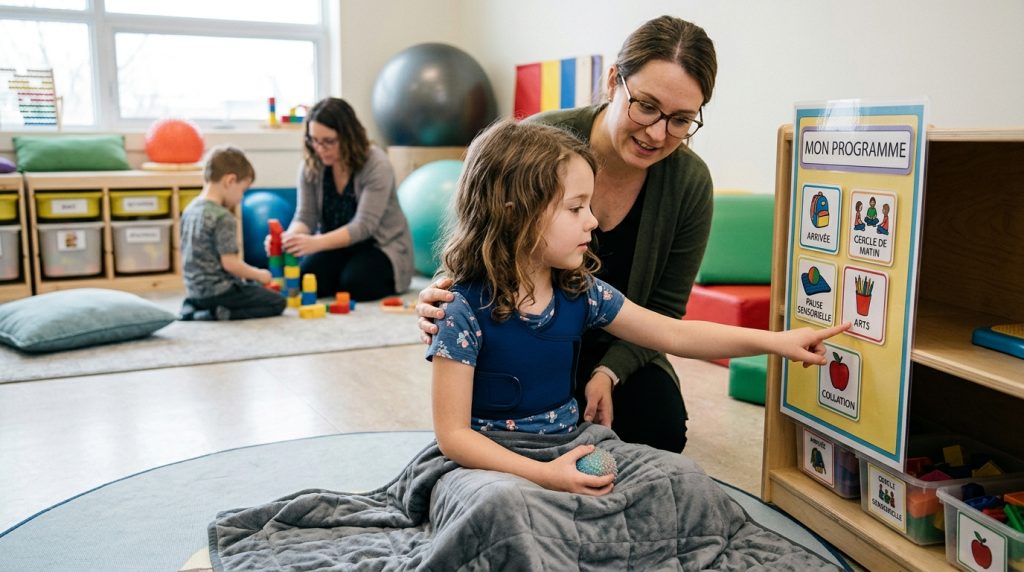
For a child overwhelmed by noise, uncertainty or a sudden change of plan, a meltdown may be less a matter of defiance than a sign that the world has become too much to process. Visual schedules and deep pressure tools can offer two different kinds of support: one makes what happens next easier to understand, while the other may help some children feel calmer in their bodies.
Visual schedules for meltdown prevention and smoother transitions
Visual schedules show the order of activities using photographs, drawings, symbols or written words. By making a routine visible, they can reduce the effort a child must spend remembering spoken instructions and guessing what will happen next.
Schedules are most useful when they match the child’s communication style and are used consistently across home or school where practical. A sudden change can still be upsetting, so adults can point to the schedule, explain the adjustment simply, and include a “change” symbol or a choice when possible. Predictability supports independence; flexibility helps a child cope when plans shift.
Deep pressure tools and sensory regulation
Some children seek or respond positively to firm, steady pressure, which may feel organizing or soothing as part of their sensory processing. Deep pressure tools can include a cushion to lean against, a body sock, a weighted lap pad or a blanket, but preferences and safety needs vary widely.
Pressure should never be forced or used to restrain a child. A child must be able to move away or remove a tool, and weighted products should be considered with advice from an occupational therapy professional or another qualified clinician. Avoid improvised pressure techniques, particularly when a child is distressed, unless a professional has shown caregivers what is appropriate for that child.
Before a difficult transition, an adult might offer Maya a choice between sitting in a quiet corner with a cushion or taking a short movement break. If she declines, the adult respects that signal and tries another support. The useful measure is the child’s response—not whether a particular tool is popular or works for someone else.
Individual triggers and supportive responses
A schedule or sensory item is more likely to help when caregivers understand what tends to precede a meltdown. Common contributors include loud environments, fatigue, communication frustration, unexpected transitions and discomfort. Observing patterns helps adults distinguish what a child may be communicating from what they assume the behavior means.
A brief record can note the setting, activity, change, sensory conditions and what helped the child recover. These observations can guide meltdown prevention without blaming the child. If Maya becomes distressed most often in a noisy hallway, for example, the family and school might try a quieter route or offer headphones before entering.
During an episode, lengthy explanations and repeated questions can add pressure. A calm voice, fewer demands and attention to immediate safety are generally more supportive. When the child is settled, adults can revisit what happened and practise an alternative way to ask for help or a break.
Several practical supports can be combined, provided they suit the individual child:
- Give a brief warning before a transition and show the next activity on the schedule.
- Offer two manageable choices, such as carrying a bag or holding a picture card.
- Reduce avoidable noise, bright light or visual clutter when these appear to contribute to distress.
- Teach a simple request for “break,” “help” or “quiet” using speech, signs, pictures or a communication device.
Personalized autism support across home and school
Visual supports and sensory strategies work best as part of a shared, individualized plan—not as a one-size-fits-all recipe. Families, educators and clinicians can compare observations, agree on consistent communication cues, and review whether a strategy actually helps the child feel safer and participate more comfortably.
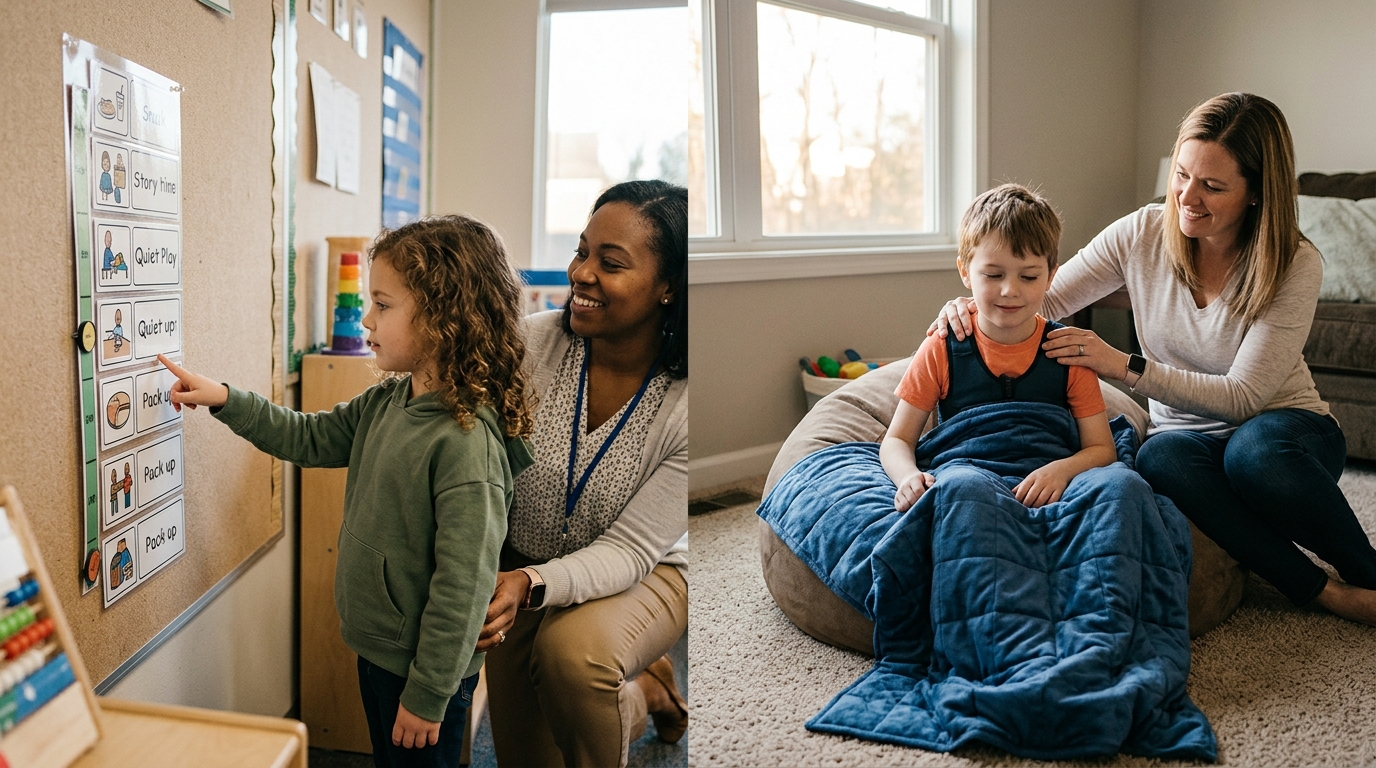
Applied Behavior Analysis (ABA) may help a qualified professional examine patterns and teach functional communication, such as requesting a pause instead of reaching a point of overload. Autism support can also involve occupational therapy to explore sensory preferences and everyday activities. The focus should remain on the child’s wellbeing and communication, not simply on making distress less visible.
The table below summarizes how these supports may fit together; each option should be adapted to the child and reviewed when circumstances change.
| Support | How it may help | Practical consideration |
|---|---|---|
| Visual schedule | Makes activities and transitions easier to anticipate | Use symbols or photos the child understands |
| Timer or countdown | Signals that a transition is approaching | Check whether sound or flashing visuals are uncomfortable |
| Deep pressure tool | May support sensory regulation for some children | Offer choice; seek professional guidance for weighted items |
| Quiet space | Reduces stimulation and offers room to recover | Keep it accessible, safe and free from demands |
| Communication aid | Helps a child express discomfort or request a break | Keep it available in the settings where it is needed |
When visual schedules, safe sensory options and respectful communication are adjusted to the child’s needs, they can make everyday demands more understandable and support greater independence. A pediatrician, occupational therapy professional or qualified behavior specialist can help families assess individual needs and develop a safe, personalized plan.